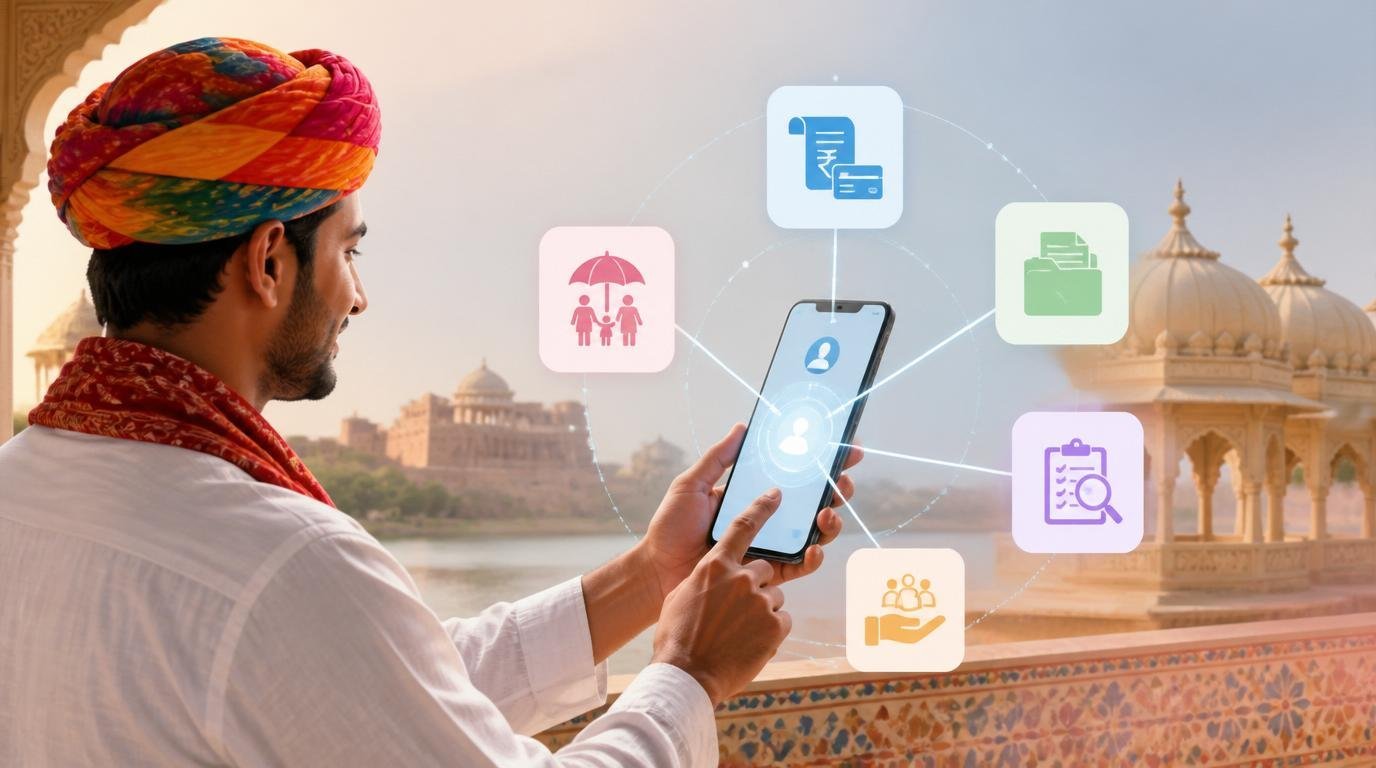
Digital transformation has changed how governments interact with people, but the real question is this: are these systems truly making life easier? In many regions, users still juggle multiple portals, remember different passwords, and repeat the same information again and again. That’s where a unified digital identity system steps in to simplify the experience for everyone involved.
In Rajasthan, the introduction of SSO ID has reshaped how citizens and government employees access services. It brings everything under one secure login, reducing complexity and improving efficiency across departments. But what does that actually mean in practical terms? Let’s explore how this system benefits both sides of the equation.
A Unified Gateway for Everyday Needs
For citizens, interacting with government services often involves multiple steps. Whether it’s applying for a scheme, paying bills, or accessing certificates, the process can feel fragmented. A centralized login changes that completely.
With SSO ID, users can access a wide range of services through one account. There’s no need to switch between platforms or remember multiple credentials. This unified approach saves time and reduces frustration, especially for those who may not be comfortable navigating complex digital systems.
But convenience is just one part of the story. The real value lies in how seamlessly everything connects.
Simplifying Life for Citizens
Think about the last time you had to fill out the same form multiple times for different services. It’s repetitive, and it increases the chances of errors. A single identity system minimizes this issue by storing user information securely and reusing it where needed.
This leads to a smoother experience where tasks that once took hours can now be completed in minutes. Citizens can:
- Apply for government schemes without repeated registrations
- Track application status in real time
- Access important documents from one place
The result is not just efficiency but also a sense of control. When people can manage their interactions with the government easily, they feel more empowered.
Empowering Government Employees
While much of the focus is on citizens, government employees benefit just as much from a unified system. Managing multiple internal portals can be just as challenging as handling public-facing services.
With a centralized login framework, employees can access departmental tools, manage workflows, and handle requests more efficiently. It reduces the administrative burden and allows them to focus on delivering better services.
Imagine processing applications without constantly switching systems or verifying the same data repeatedly. Wouldn’t that lead to faster outcomes and fewer mistakes?
Improved Efficiency Across Departments
One of the most significant advantages of a unified system is how it connects different departments. Instead of operating in silos, services become part of a larger, integrated network.
This integration ensures that data flows smoothly between departments, reducing duplication and improving coordination. For example, when one department updates a user’s information, it can be reflected across other services without additional effort.
Such efficiency benefits both users and administrators. Citizens receive faster responses, while employees can handle higher volumes of work without compromising quality.
Transparency That Builds Trust
Trust is a critical factor in public services. People want to know what’s happening with their applications and whether their requests are being processed fairly.
A centralized system enhances transparency by allowing users to track their activities and receive updates in real time. There’s less uncertainty and fewer reasons to rely on intermediaries.
For government employees, this transparency also creates accountability. Processes become more structured, and it’s easier to identify and resolve issues when they arise.
Isn’t it reassuring to know exactly where your request stands instead of waiting without any updates?
Strengthening Data Security
When dealing with sensitive information, security cannot be compromised. A unified login system is designed with robust safeguards to protect user data.
Instead of managing multiple accounts with varying levels of security, users rely on a single, well-protected identity. This reduces the risk of breaches caused by weak or reused passwords.
At the same time, government systems can implement consistent security measures across all services, ensuring a higher standard of protection. This balance between convenience and safety is essential for long-term trust in digital platforms.
Accessibility for a Wider Audience
Not everyone is a tech expert, and that’s an important consideration in public service design. A system that is too complex can exclude a significant portion of the population.
By simplifying access and reducing the number of steps required, a unified login makes services more inclusive. People from different backgrounds, including those with limited digital experience, can navigate the system with ease.
This inclusivity plays a crucial role in bridging the gap between urban and rural users, ensuring that digital benefits reach everyone.
Saving Time and Resources
Time is one of the most valuable resources for both citizens and government employees. Traditional processes often involve long queues, paperwork, and repeated visits to offices.
A centralized digital system eliminates many of these inefficiencies. Tasks can be completed online, documents can be accessed instantly, and applications can be processed faster.
For citizens, this means less time spent on administrative work. For employees, it means better resource management and improved productivity.
Supporting a Digital-First Future
The shift toward digital governance is not just a trend—it’s a necessity. As populations grow and demands increase, traditional systems struggle to keep up.
A unified identity system lays the foundation for a more scalable and adaptable approach to governance. It enables the integration of new services, supports innovation, and ensures that systems can evolve with changing needs.
SSO ID plays a key role in this transformation by providing a reliable and flexible framework for accessing services. It’s not just about solving today’s challenges but also preparing for the future.
Are There Any Limitations?
No system is without its challenges. As adoption increases, maintaining performance and ensuring data security will remain top priorities. There is also a need for continuous awareness campaigns so that more people understand how to use the system effectively.
However, these challenges are manageable with the right strategies. Regular updates, user feedback, and ongoing improvements can help address potential issues and enhance the overall experience.
A Balanced Perspective on Its Impact
SSO ID has introduced a more organized and user-friendly way to access government services. For citizens, it simplifies interactions and saves time. For government employees, it streamlines operations and improves efficiency.
The true benefit lies in how it brings both sides closer together through a shared, seamless platform. When systems are designed with users in mind, they don’t just function better—they create a more positive experience for everyone involved.
As digital ecosystems continue to grow, solutions like this will become increasingly important. They demonstrate that with thoughtful design and implementation, even complex systems can be made accessible, efficient, and reliable.