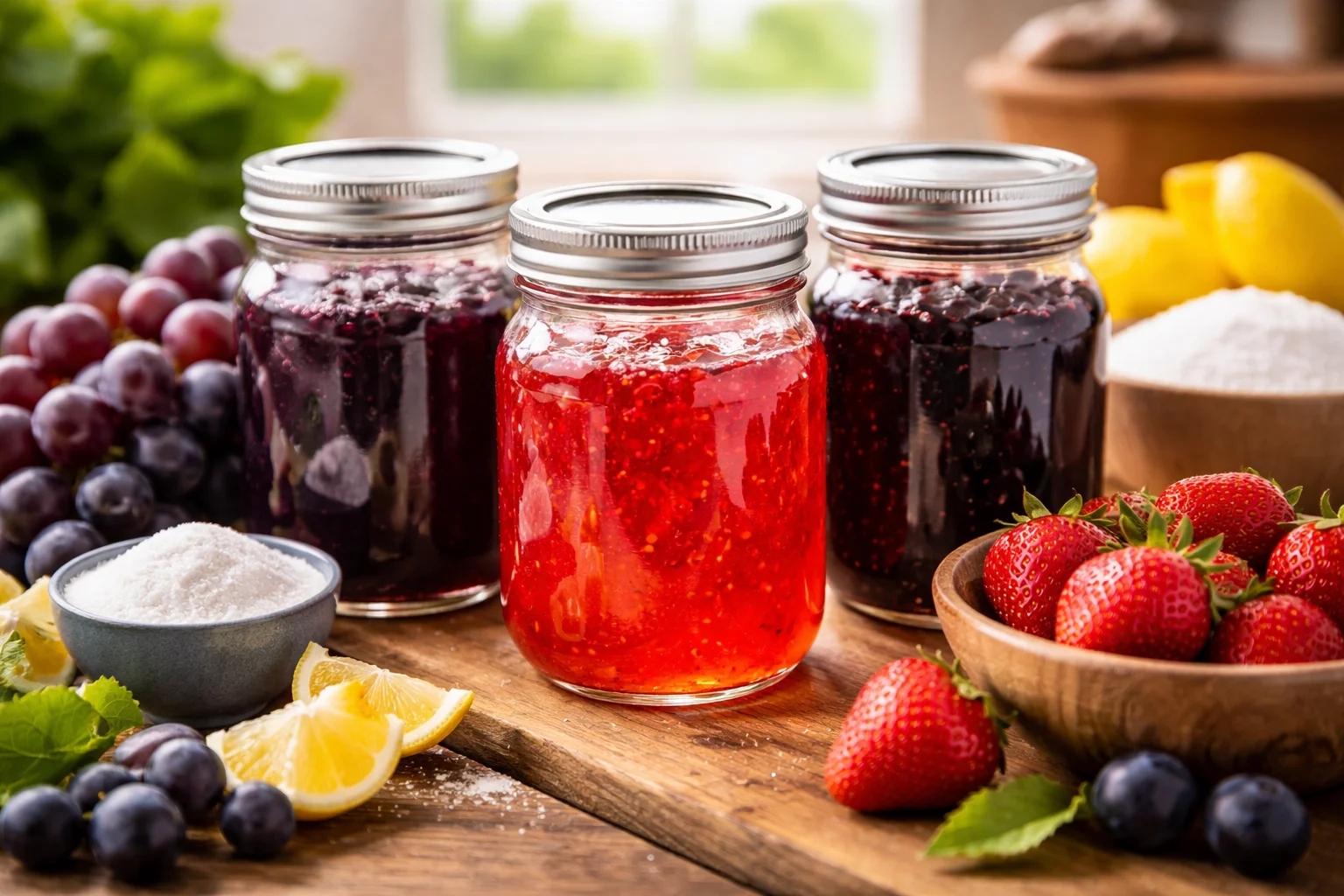
Introduction to Jelly Recipes
Jelly, a beloved dessert and condiment, is made by cooking fruit juice with sugar and a jelling agent like pectin. This versatile treat can be enjoyed on its own, as a spread, or even as a glaze for savory dishes. At recipesjelly.com, we provide a wide range of jelly recipes, from traditional grape jelly to exotic flavors that will tantalize your taste buds. With our expert guidance, you can master the art of jelly making and impress your family and friends with homemade sweet treats.
Popular Jelly Recipes
Classic Grape Jelly
The quintessential grape jelly is a favorite in many households. Known for its rich flavor and smooth texture, grape jelly is a staple that pairs perfectly with peanut butter sandwiches or can be used as a glaze for meats.
Ingredients
- 5 cups grape juice (preferably from Concord grapes)
- 7 cups granulated sugar
- 1 pouch (3 oz) liquid pectin
Instructions
- Prepare the Juice: Extract juice from fresh grapes by cooking them with a little water and straining through a jelly bag.
- Cook the Jelly: Combine grape juice and sugar in a large pot. Bring to a rolling boil.
- Add Pectin: Stir in the liquid pectin and return to a boil for 1 minute.
- Jar the Jelly: Remove from heat, skim foam if necessary. Pour into sterilized jars, leaving 1/4-inch headspace. Seal jars and process in a boiling water bath for 5 minutes.
Unique Strawberry Jelly Variations
Strawberry jelly is a crowd-pleaser, and with a few twists, you can create variations that are truly unique.
Strawberry Basil Jelly
- Ingredients: 4 cups strawberry juice, 7 cups sugar, 2 tbsp lemon juice, 1 pouch liquid pectin, 1/4 cup finely chopped fresh basil.
- Instructions: Follow the classic jelly-making steps, adding the basil just before jarring.
Strawberry Jalapeño Jelly
- Ingredients: 4 cups strawberry juice, 7 cups sugar, 1 pouch liquid pectin, 1-2 jalapeños (seeded and minced).
- Instructions: Follow the classic jelly-making steps, incorporating jalapeños with the juice.
DIY Jelly Making Techniques
Basic Steps to Make Jelly
- Select Quality Ingredients: Fresh, ripe fruits produce the best flavor.
- Extract Juice: Use a juicer or a jelly bag for clear juice extraction.
- Measure Ingredients: Accurate measurements are crucial for proper jelling.
- Cook to Perfection: Maintain a rolling boil to ensure sugar dissolves and pectin activates.
- Test for Doneness: Use a spoon or plate test to check the jelling point.
- Jar and Seal: Properly sterilize jars and process them in a boiling water bath.
Advanced Techniques for Flavor Infusion
- Herb Infusions: Add herbs like basil or mint for a fresh twist.
- Spice Blends: Incorporate spices like cinnamon or cloves for warmth.
- Citrus Zest: Enhance fruit jellies with lemon or orange zest for brightness.
Tips for Perfect Jelly
Common Mistakes and How to Avoid Them
- Incorrect Measurements: Always use precise measurements for sugar and pectin.
- Inadequate Boiling: Ensure a full rolling boil to activate pectin.
- Improper Sealing: Sterilize jars and lids to prevent spoilage.
Best Practices for Jelling and Setting
- Temperature Control: Maintain consistent heat during cooking.
- Testing Jelling Point: Use a candy thermometer or plate test to determine when jelly is ready.
Health and Nutritional Aspects
Benefits of Homemade Jelly
- Natural Ingredients: Control the quality and quantity of ingredients.
- Reduced Additives: Avoid preservatives found in store-bought jellies.
- Customizable Sugar Levels: Adjust sugar content to suit dietary needs.
Low-Sugar and Vegan Options
- Low-Sugar Jelly: Use low-methoxyl pectin which requires less sugar.
- Vegan Jelly: Opt for agar-agar or chia seeds instead of gelatin.
FAQs
How can I make jelly without gelatin?
Use plant-based alternatives like agar-agar or pectin instead of gelatin for vegan-friendly jelly.
What are the best fruits for making jelly?
Fruits like grapes, strawberries, raspberries, and apples have high pectin content and are ideal for jelly making.
How long can homemade jelly be stored?
Properly sealed and stored, homemade jelly can last up to a year in a cool, dark place.
How can I reduce sugar in jelly recipes?
Use low-methoxyl pectin, which allows jelling with less sugar.
What are some cultural variations of jelly?
Explore jellies like quince paste from Spain or redcurrant jelly from France for a cultural twist.
How do I fix jelly that hasn’t set?
Reboil the jelly with additional pectin, ensuring a rolling boil for at least one minute.
Can I make jelly without added pectin?
Yes, fruits like apples and quinces have natural pectin and can set without additional pectin.
Conclusion
Embark on a flavorful journey with www.recipesjelly.com to discover the delightful world of jelly making. With a variety of recipes and expert tips, crafting your own homemade jellies has never been easier or more rewarding. Whether you’re pursuing classic flavors or experimenting with new combinations, the possibilities are endless. So, gather your ingredients, follow our guide, and create jellies that will impress and delight. Visit recipesjelly.com for more inspiration and become a jelly-making aficionado today!